Search is no longer only a list of blue links. People now ask questions in Google and see AI Overviews or AI Mode answers. They also ask ChatGPT, Perplexity and Gemini, and those tools often cite websites as sources. For a South African business, that changes what “being visible in search” means.
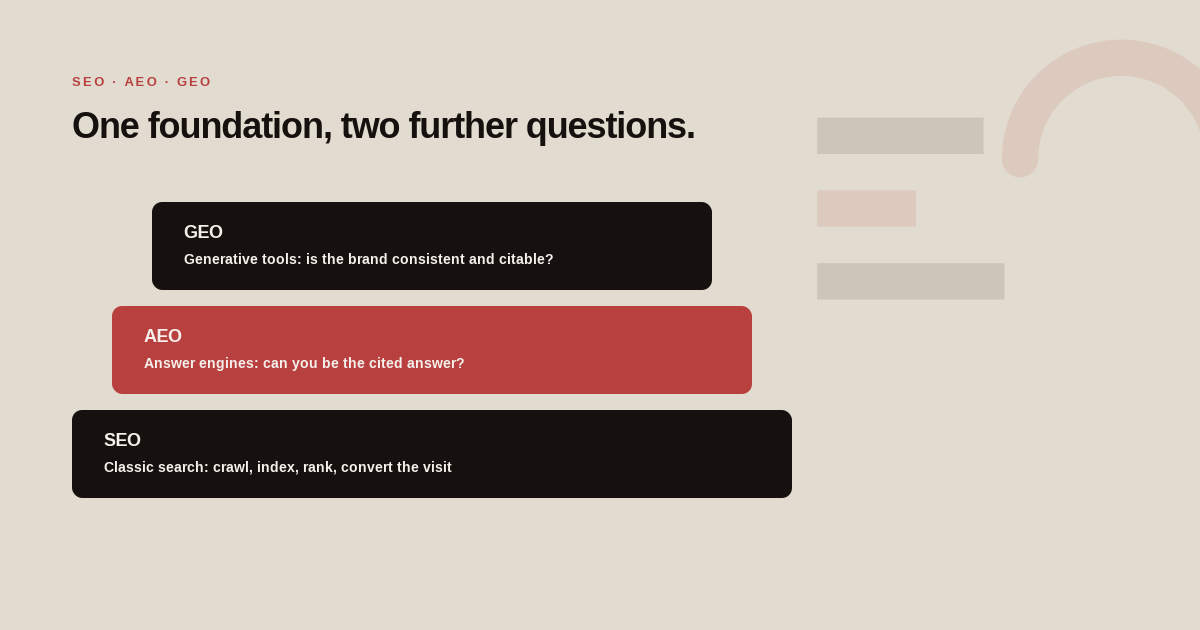
AEO (Answer Engine Optimisation) and GEO (Generative Engine Optimisation) are industry terms for the work of making your brand easy to find, understand and cite in those AI answers. They are not official Google product names. SEO is still the foundation. Google’s own guidance is that the same technical requirements and helpful-content standards that apply to classic Search also apply to AI Overviews and AI Mode. There are no extra technical hoops and no special “AI-only” markup you must add to appear in those features. See Google Search Central, AI features and your website (updated 10 December 2025).
Where SEO still does the heavy lifting
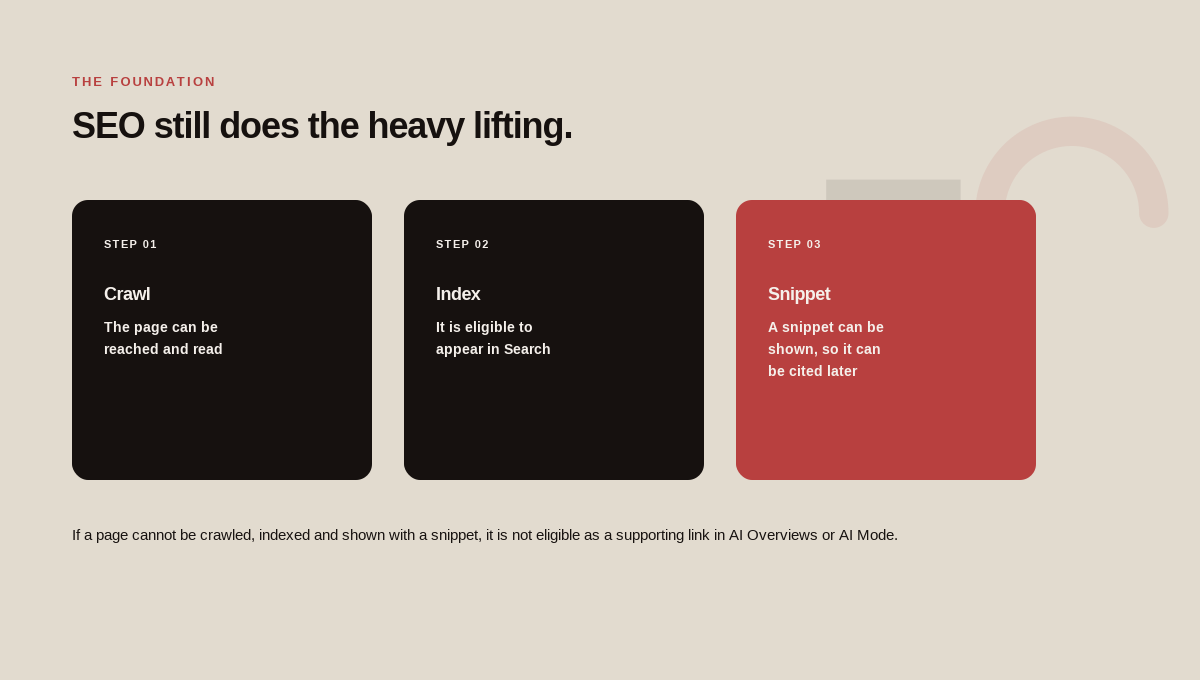
If Google cannot crawl, index and show a snippet of your page in ordinary Search, that page is not eligible to be a supporting link in AI Overviews or AI Mode. Google states this plainly: a page must be indexed and eligible to appear in Search with a snippet, and there are no additional technical requirements for AI features.
That means the work you already know still matters: a clean site structure, useful titles and headings, internal links, pages that work on a phone, and content written for people rather than stuffed for crawlers. Google’s May 2025 Search Central post on succeeding in AI search, by John Mueller, repeats the same advice: unique, valuable, people-first content, a decent page experience, and the usual technical requirements for Search. You can read it here: Top ways to ensure your content performs well in Google’s AI experiences on Search.
What AEO and GEO add
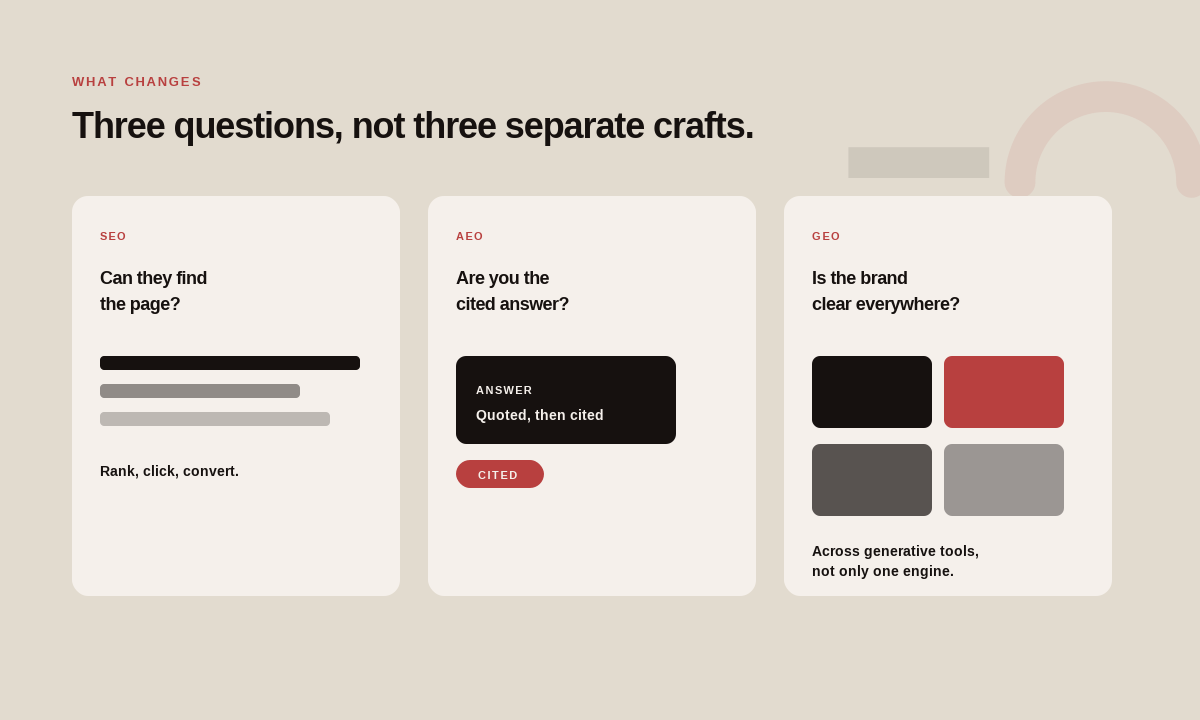
Classic SEO asks: can someone find the right page, click it, and take the next step? AEO and GEO also ask: when an AI system writes an answer, is your brand in that answer, and is it cited accurately?
Google describes how AI Overviews choose sources. They start with ranked results from the Search index, may run related “query fan-out” searches, ground the answer in those pages, and then link to pages that corroborate the claims. That process is documented in Google’s guide to attribution and factuality in Search generative AI features.
For South African firms, this often shows up on questions such as “Do I need to register a company to trade in South Africa?”, “What is the difference between a pty and a sole prop?”, or “Which gift delivery service is reliable in Cape Town?”. If your page is the clear, well-sourced answer, you are in a stronger position to be cited than if the same facts are buried in a thin, promotional paragraph.
How this differs in practice
- SEO still wins the right to be in the index, to rank, and to convert the visit.
- AEO focuses on being the answer: clear questions and answers on the page, definitions, steps, and facts that a system can quote without twisting them.
- GEO looks across generative tools, not only Google: consistent brand and entity details, reputation on other sites, and whether ChatGPT or Perplexity can find and name you when someone asks in that tool.
None of this replaces technical SEO, content strategy or measurement. It sits on top of them. If you want a structured review of how your brand currently appears in AI answers, see the AI Search Visibility Audit, or AEO and GEO services. To talk it through, get in touch.
Sources
- Google Search Central, “AI features and your website”, last updated 10 December 2025: developers.google.com/search/docs/appearance/ai-features
- John Mueller, “Top ways to ensure your content performs well in Google’s AI experiences on Search”, 21 May 2025: developers.google.com/search/blog/2025/05/succeeding-in-ai-search
- Google Search Central, “Attribution and factuality in Search generative AI features”: developers.google.com/search/docs/fundamentals/gen-ai-attribution-factuality
Want this checked on your own site?
The AI Search Visibility Audit reviews how your brand appears in Google AI Overviews, ChatGPT, Perplexity and Gemini, then gives you a prioritised plan. It costs R6,500.00 and typically takes 5 to 7 working days. You can also send an enquiry or book a 20-minute call.