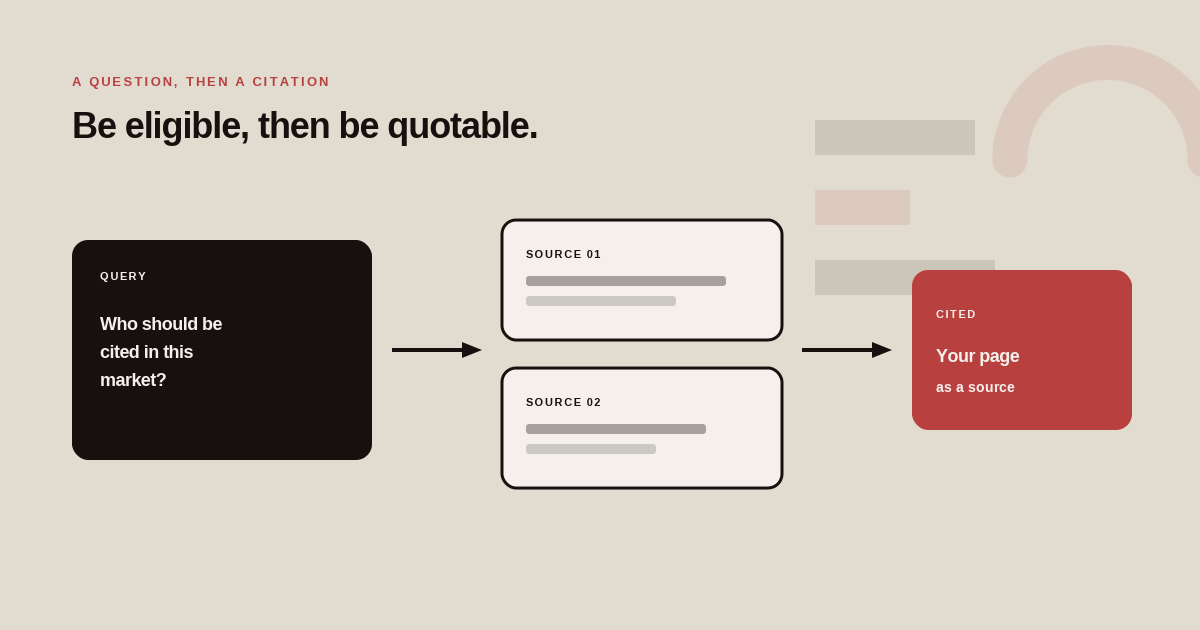
There is no official switch that guarantees your page will be cited in Google AI Overviews or in ChatGPT. What you can do is meet the conditions each platform has published, then write pages that are easy to quote accurately. This article sticks to that: official eligibility rules, plus practical habits that follow from them.
Google AI Overviews: be eligible first
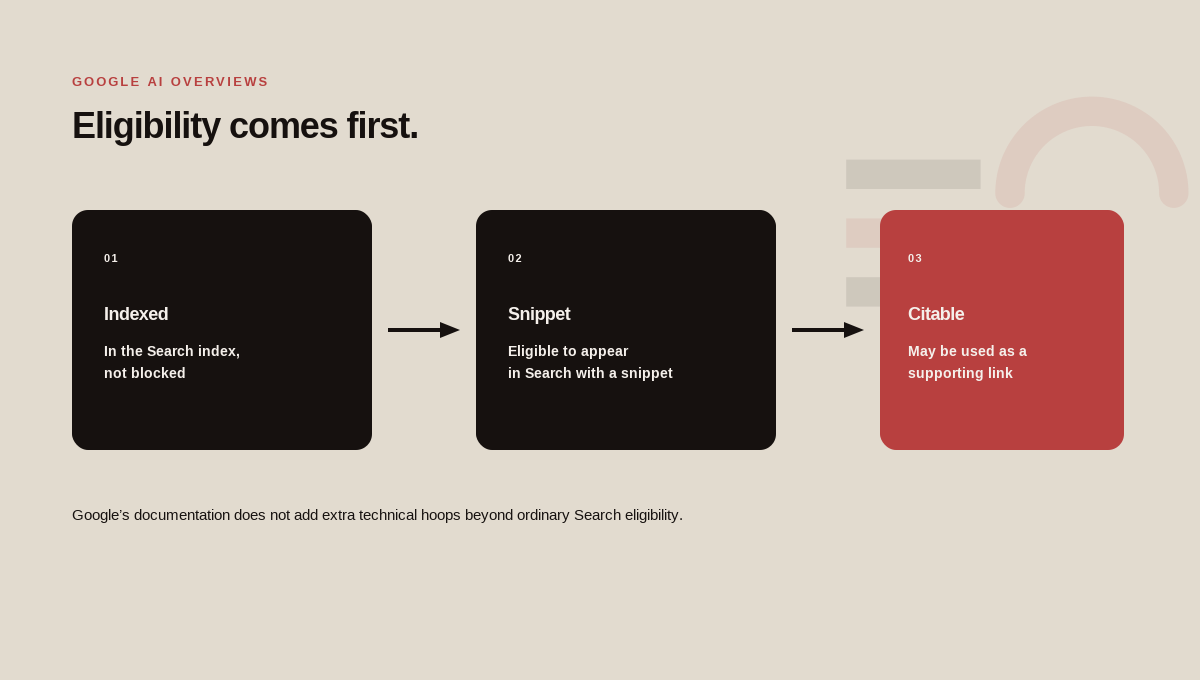
Google’s documentation on AI features and your website is unambiguous. To be eligible as a supporting link in AI Overviews or AI Mode, a page must be indexed and eligible to appear in Google Search with a snippet. There are no additional technical requirements, and Google says you do not need new machine-readable files, “AI text files”, or special schema.org types to appear in these features.
The same page lists the fundamentals that still matter: allow crawling in robots.txt, make content findable with internal links, offer a good page experience, keep important content in text (not only in images or scripts), and make sure any structured data matches the visible text on the page.
How a citation is chosen is a separate step. Google explains that AI Overviews start from ranked Search results, may run related searches (query fan-out), ground the answer in those pages, and then link to sources that corroborate the claims. Relevance, quality and a clear layout all play a part. That is in Google’s guide to attribution and factuality.
In practice, for a South African site, that looks like this:
- The page returns a normal 200 status, is not blocked to Googlebot, and can be indexed.
- The main answer is visible as text, near the top, in plain language.
- Claims are specific enough to check (dates, definitions, steps, conditions), so a system can corroborate them.
- The page is already a sensible result for the question someone would type or ask.
Google also notes that AI Overviews only appear when the system thinks they add something beyond classic results, so they will not show for every query. Appearing in ordinary Search is still the door you have to walk through.
ChatGPT: allow the right crawler
OpenAI documents its crawlers in its Overview of OpenAI Crawlers. Two user agents are easy to confuse:
- OAI-SearchBot is for search. It is used to surface websites in ChatGPT’s search features. If you opt out of OAI-SearchBot, OpenAI says your site will not be shown in ChatGPT search answers, though it can still appear as a navigational link. Changes to robots.txt can take around 24 hours to take effect.
- GPTBot is used when OpenAI crawls content that may be used to train its generative AI foundation models. Allowing or blocking GPTBot is a training choice. It is independent of search.
You can allow OAI-SearchBot so you can appear in ChatGPT search, and still disallow GPTBot if you do not want that content used for foundation-model training. OpenAI states those settings are independent. ChatGPT-User is a different agent again: it may visit a page because a person asked a question, and OpenAI says it is not used to decide whether content appears in Search.
Allowing the search crawler does not guarantee a citation. It only keeps you eligible to be considered.
Write so you can be quoted fairly
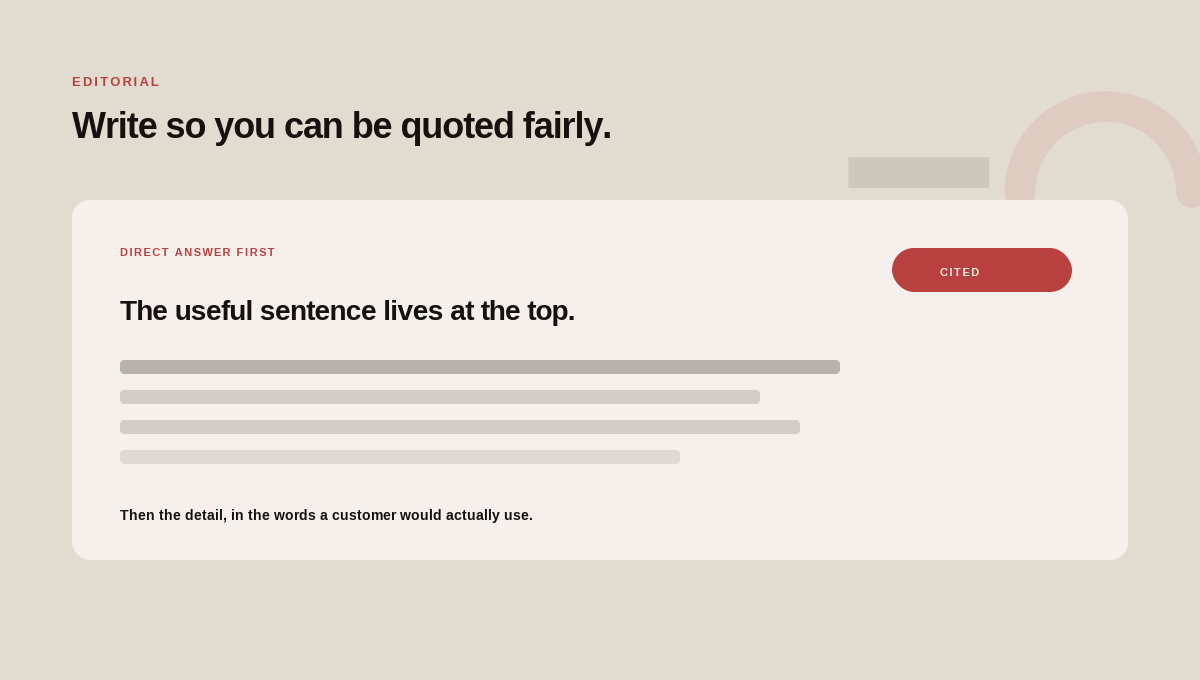
Once you are eligible, the useful work is editorial. Put the direct answer first, then the detail. Use the words a customer in South Africa would actually use. Keep names, prices, hours and legal facts consistent across your site, because conflicting versions are hard to cite with confidence. Link to your own related pages so both people and systems can follow the topic.
If you want this checked against your priority queries, rather than guessed at, the AI Search Visibility Audit is built for that. You can also read about ongoing AEO and GEO work or start a conversation.
Sources
- Google Search Central, “AI features and your website”, last updated 10 December 2025: developers.google.com/search/docs/appearance/ai-features
- Google Search Central, “Attribution and factuality in Search generative AI features”: developers.google.com/search/docs/fundamentals/gen-ai-attribution-factuality
- OpenAI, “Overview of OpenAI Crawlers”: developers.openai.com/api/docs/bots
Want this checked on your own site?
The AI Search Visibility Audit reviews how your brand appears in Google AI Overviews, ChatGPT, Perplexity and Gemini, then gives you a prioritised plan. It costs R6,500.00 and typically takes 5 to 7 working days. You can also send an enquiry or book a 20-minute call.